The original diary was written in Yiddish after the Holocaust by my father, Yechiel Hershkowitz Z”l, 1918-1979
My father lived on 27 Zamkova Street, in Bedzin, near the Great Synagogue
Website design and typing: Benny Hershkowitz (son)
hershko@netvision.net.il
EMAIL to Benny Hershkowitz
Translation from Yiddish to Hebrew by Dr. Leah Gurfinkel
Translation from Hebrew to English By Dvora Mann
Photo of the Hershkowitz Family 1936 in Bedzin
Yechiel Aharon is sitting to the left, his grandmother, Nissel, next to him. Seated to the right is grandfather Yisrael Yosef. The sisters, Frimet and Ruchama Baila, are standing
There was another brother, 20 years older than my father, Mordechai Pinchas((I don't know what happened to him)
On September 1, 1939, armored vehicles stormed with full force on the roads of Poland.
The German army invaded all of Poland’s roads, cities, and towns
Everywhere, people were fleeing, families were dragging small carts, loaded with their shabby belongings and basic necessities
In the little handcarts, they also "crammed" in sick family members. They were all panicking, trying to flee. No one knew where they might go to save their poor lives
From time to time it became clear in which streets the German executioners shot the Jews you knew, innocent people, in order to arouse fear and terror
We heard the German fighter-planes above. Their mission was not necessarily to attack the Polish army, but rather to bomb the cities and kill the wandering masses who were boarding trains and the homeless searching for a place where they may sleep for a few hours
Every day new decrees were issued, The gold, the silver, and the copper had to be handed over. The Jews relinquished all they had, hoping to be left in peace, yet nothing helped
The Germans demanded of the Jewish community members in areas under their control to pay money.. That is how they planned to carry out their filthy acts with the assistance of the Jewish committees. All the directives and decrees came directly from the German chief executioner. This fact made it evident that all European cities received the same orders
The Jewish Councils were forced to set up hard labor groups in the cities every day. In addition, from the beginning, Jewish men, women, and children were forced to wear wide ribbons on their left sleeves that would indicate that they were Jews so that they could be more easily identified as such. There was no food for everyone. All the little money was gone – the Germans took it all for the war needs. All the savings in the bank were taken out and they gave in return 20 or 50 paper cigarettes. Hence it was impossible to buy small things like milk and the like
The Jewish Councils were forced to provide daily groups of laborers in the cities. Additionally, from the very beginning, Jewish men, women, and children were forced to wear wide ribbons on their left sleeves to indicate that they were Jews, so that they could be easily identified. There was not enough food for everyone. The little money they had was gone. The Germans confiscated all the Jewish assets for funding their war efforts. People's savings accounts were emptied by the Germans. In return, they gave the account owners 20 or 50 paper cigarettes. It became impossible to buy staples such as milk and the like
When the bakers baked, people stood in line for a whole day, in the hope of getting a small piece of bread. While waiting, fights broke out, which led to the Germans firing at the crowds and killing innocent people
When they finally reached the baker and received their small piece of black bread, the Germans would snatch it from their hands and give it to the Christian Poles. The Jew returned home without the bread, tormented, and humiliated
It was worse for those with small children. Knowing there was no way to provide them with food was heartbreaking. The same was true of the sick family members
I am telling you about my historical experiences not for literary purposes or just stories – I tell the real truth – at least it will remain for future generations – so that Jewish generations can read and draw conclusions
My city of Bedzin in Poland was almost entirely a city of Jews, and was called Jerusalem of Zaglebie. A city of Torah scholars and writers. A city that was full of Jewish goodness and youth ,whose heart beat the Zionisict spirit . It had all the Zionist organizations, it had Yeshivot. Its synagogue was visited not only by Jews, but also by Polish dignitaries
Every home, every house of prayer, and all groups of worshipers from all walks of life, appreciated the beauty of Jewish art
Jewish Bedzin was known for its simple workers. Each house had a small workshop – each Jew worked on something else. The goods were exported to Silesia
Jewish porters, shoemakers, and tailors organized themselves unofficially to secure and defend against anti-Jewish attacks by local youths
It is worth noting that when the Christian boys enlisted in the army, they used to pretend to be drunk and on their way to enlistment "revenged" the innocent Jews, and beat them as much as they could. When they entered Bedzin, the Organized Defense came out to meet them. The simple porters or the Patex brothers would break their bones and avenge them
Precious Jews were in Bedzin
The war broke out in September 1939. It cannot be said that it was a war between Poland and Germany. The Germans simply attacked Poland, and the Polish army, out of fear, dispersed everywhere
The Jews were the first to feel the revenge
Each Gestapo in itself was an 'angel' of death. Each of the Gestapo boasted of the number of Jews he killed
During the Selichot days, the Gestapo entered the home of the Malach family, cast out 17 men and teenage boys, dressed in their kapotes (Chassidic coats), led them to the Governor’s courtyard, and shot them all to death. It happened to many other Jews. It was impossible to escape
The Great Synagogue of Bedzin

Shabbat before Rosh Hashana
As known, Jews were not allowed to leave their homes from six in the evening to six in the morning
Germans and their Polish aides poured gasoline through the window and set the synagogue and the Beit Midrash on fire, like a small Beit Hamikdash (Holy Temple in Jerusalem). Our family was together in a room located next to the synagogue


Original photos of propaganda postcards of the Nazis ימ"ש ,that my father purchased and sent to the United States
A photo I recently received from an archive from Poland
The burning of the synagogue, the gunfire, and screams of the people whose relatives were shot, penetrated the burning houses
It was hell on earth that no one can describe-the German executers scattered to the Jewish houses, threw grenades into them and fired into the Jewish rooms . Our house at Leibish Liver in Zamkova 27 started burning and a bullet entered it – the smoke caused suffocation and we saw we were about to burn alive.. The only question left was what is the easier death, that of fire or of shooting
The burning of the synagogue, the shooting, and screams of the people whose relatives were shot, penetrated the burning homes
It was hell on earth. No words can describe the horror
The German executioners scattered to the Jewish houses, threw grenades into them, and fired their guns through the windows.
Our house, at Leibish Liver on Zamkova Street number 27, began burning. A Bullet penetrated it. The smoke suffocated us, and we realized we were about to burn alive. Whoever came out was shot. We had to choose then the easier death; by fire or by a bullet
Original photo of a Nazi propaganda postcard my father purchased and sent to the United States
After the aunt heard that my father had survived, she sent these pictures to Israel after finding out the name of Rabbi Yisrael Larehovsky from the city of Diwart
(Two pictures of the Nazis burning wigs and a picture of the back with my father writing to his aunt)


Translation of the back of the photo
Dear Aunt, Uncle, and Family
I am writing to you about the Jewish tragedy in Bedzin. When German beasts savaged the Jewish people. When Germans destroyed yeshivas and burnt alive decent and righteous Jews. It is impossible for a civilized human being to envision how in our days, such savagery and such torture can be afflicted on the innocents. I am sending you the picture that shows the burning of a Chassidic Jew with a candle
In my Shabbat suit, I notice holes not far from my heart. I am sure that three bullets penetrated my body. I look for blood, as it is not possible to be shot three times without sustaining an injury. I ask my mother to check. She finds no blood. I feel good, and I do not collapse
But who in those days thought only of himself?
All of us, Father, Mother, Frimet, my sister, and Frimet’s 10-year-old son – discuss which way we may choose to die
I believed that death by a bullet was less painful. I was anxious to go out. My sister asked that I wait until the last minute. Meanwhile, some of the flames in our room above us provided some light
I noticed the three holes in my suit. My shirt was on crookedly. The bullets apparently pieced the shirt in an angle away from my body. I was not harmed.
Outside, the recurring cries and screams of "Shema-Israel" were heard, from the Jewish tenants whose homes were burning
At midnight, the Germans believed they had finished their filthy job and that no Jew was left alive. Then they left. When it got quieter outside, we crawled out of our houses and fled beyond the mountains. We entered the home of our acquaintance, Hulawa, who lived by the river, Tcharna Peshmesh. His landlady was a Christian. She held on to her son and wished to throw us out and avoid “suffering from the simple dirty Jews". But in the end, her pity overcame her disgust, and she allowed us to stay the night with our Jewish acquaintances
At six o’clock the following morning, I ran to see if our house burned down completely , and check if it was still inhabitable
The Germans responsible for the destruction met me on the way and said: "Tell us the truth. Who burned all the houses, and who is responsible for all the corpses lying outside?"
I could not say they themselves did all this, for fear of being shot
One hundred victims lost their lives that hellish night
Interestingly, as I was standing in our house, evaluating what burnt and what can still be salvaged, mourning the loss, Christian Poles came by and said, "Give me this, give me that. You are not going to live much longer, and you will have no need for these things."
My heart ached as the forces of darkness gained sovereignty over the poor and tortured people. I asked the Christians to leave and stop irritating me
At 10 or 11 that morning, my sister, whose husband was shot by the German murderers, arrived. We already knew of the trouble befalling our people, but now we had to deal with our ordeal. My sister helped, and we collected a few things left in the house. We went to the Talmud-Torah house and settled there
The Jewish Council (Judenrat)
The Jewish Council received new orders daily
As is well known, the Germans planned to build a highway 40 meters wide from Berlin to Moscow. In Upper Silesia, which today is in the communist part of Germany, they stationed a labor camp every 10 kilometers, with 400 young people in each camp
These young laborers dug the sand by hand and by machine, loaded it on small wagons, pushed it for a mile or two, until a small train arrived and took the cargo for the purpose of building the highway
The Jewish Council of Bedzin first sent their quota of workers from the lower class, poor and the suffering families, whose sons were the first to be taken into forced labor in the camps
On 10/27/40, young people received paper notes advising them to present themselves at an orphanage in Bedzin
We were glad to be considered productive, thinking it may result in an improved situation for the Jews and ease the harshness of the imposed decrees
Jews are trusting people and tend to believe in all. The notion that the cultured and civilized German nation could commit such atrocities never entered anyone’s mind
On Simchat Torah, I received a note from the Jewish Council. I was asked to report to the orphanage early the next morning and to join the labor force. An argument ensued in our room at the Talmud Torah. Being the youngest child, I was everyone’s favorite. My mother and father cried silently, fearing they may never see me, their son Yechiel, again. My sisters, Frimet, Ruhama-Baila, and the three children, who were also present, attempted to comfort my parents
“Dear parents,” they said. “Remember the miracles that he already experienced.” They spoke about the bullets that missed me when our house was burning alongside the synagogue. They spoke of a second time when the Germans’ shot missed me as I was waiting for bread at the baker’s shop. “Now, too,” they added, “God will watch over him at the labor camp, and he will return home safe and sound.”
The issue at hand now was that of food and clothes. What was there to equip me with, as most everything had been burned. My mother found a small bag, and in it, she packed all she can find. My father accompanied me to the orphanage
As we passed by the Bedzin's hospital, the manager, known as Leizer the Yellow, came running with his 14-year-old son, who hit my father's shoulder with a stick
I was upset. I grabbed the stick and threw it over the hospital fence. I pushed the boy hard, and he fell. We feared he might take revenge, but off he ran, and we continued onward toward the orphanage
The building was located far behind the city. Hundreds of people had already gathered there, each holding his bundle. Parents and family members, who accompanied the young men ,were standing there too, not knowing this was their child’s last journey and the last they’ll ever see of him
Jewish policemen shoved the young people inside the orphanage, and the anguished families returned to their homes, thinking that they may see their children again
The SA(Sturmabteilung) men assigned to guard us, wore black coats, and with Swastika on their arms. They organized us in groups of hundreds. Before long, Kapos showed up and took charge of us, the people of Bedzin
Yankele Ehrlich became a Kapo
Four hundred young people stood ready to march to the train station; among them, ten girls who were most probably destined for kitchen work
There was no food provided that entire day. We traveled overnight, and by morning we arrived in Falkinberg – a city in East Germany’s Upper Silesia
From there, we walked as soldiers. Left, left. One, two
We were commanded to sing as we walked. So, we sang Hallelujah in a familiar melody. We were very tired after the 10-kilometer walk that ended in a camp called Kleinmengersdorf
It was a barracks camp. In each barrack there were 24 people and bunk beds.
We dropped tired
First there were camps
Labor camps
We did not know what was to befall us. There was no water or electricity. Everything was new. We washed our faces with the tea we were given to drink
On the first day of camp, the work involved preparations for the first camp
An older Jew named Tzion, who spoke German and Polish, served as a go-between and conveyed the orders in the camp. Rumor had it that he was a “Meshumad,” an apostate
Our work began on our second day, building a 10-kilometer highway. Similar camps with similar conditions were erected 10-kilometers apart. We dug out sand and loaded it on trucks. It was hard physical work
The Jewish Kapos pressed laborers to load the trucks to capacity. For the weak among us, this was the early taste of hell. They were the first to experience blows to their bodies, because they were unable to work ,due to their weakness
The weak were accused of laziness and unwillingness to work. Among them were the learned Torah scholars. Due to the deficiency of food or perhaps due to refusing non-kosher food, they fell like flies
It was hard to get used to the thin soup and 300 grams of bread, but then, it was still possible to receive food packages from home, which also raised morale
Postcards were still allowed to be written, and there was still somebody to write to
We did not know that their conditions back home were worse than ours, as the postcards were written in German-Yiddish, and open to German censorship
So the families back home, like us, wrote that things were well and fine. To let the family know a bit of the truth, we asked them to send “regards to the baker,” from which they learned we did not have enough food. In turn, when they asked about our “great grandfather,” we understood that their situation was worse than death

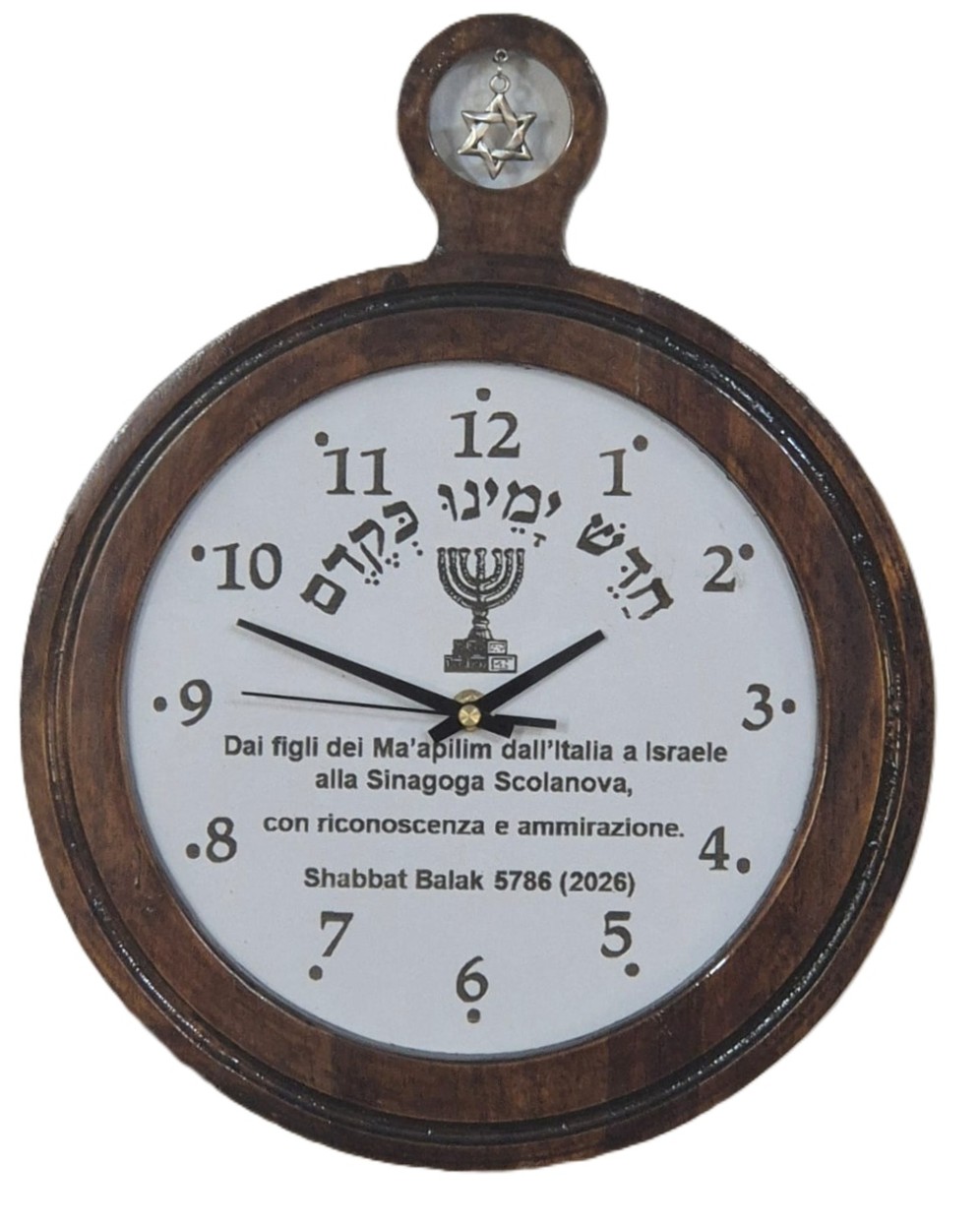
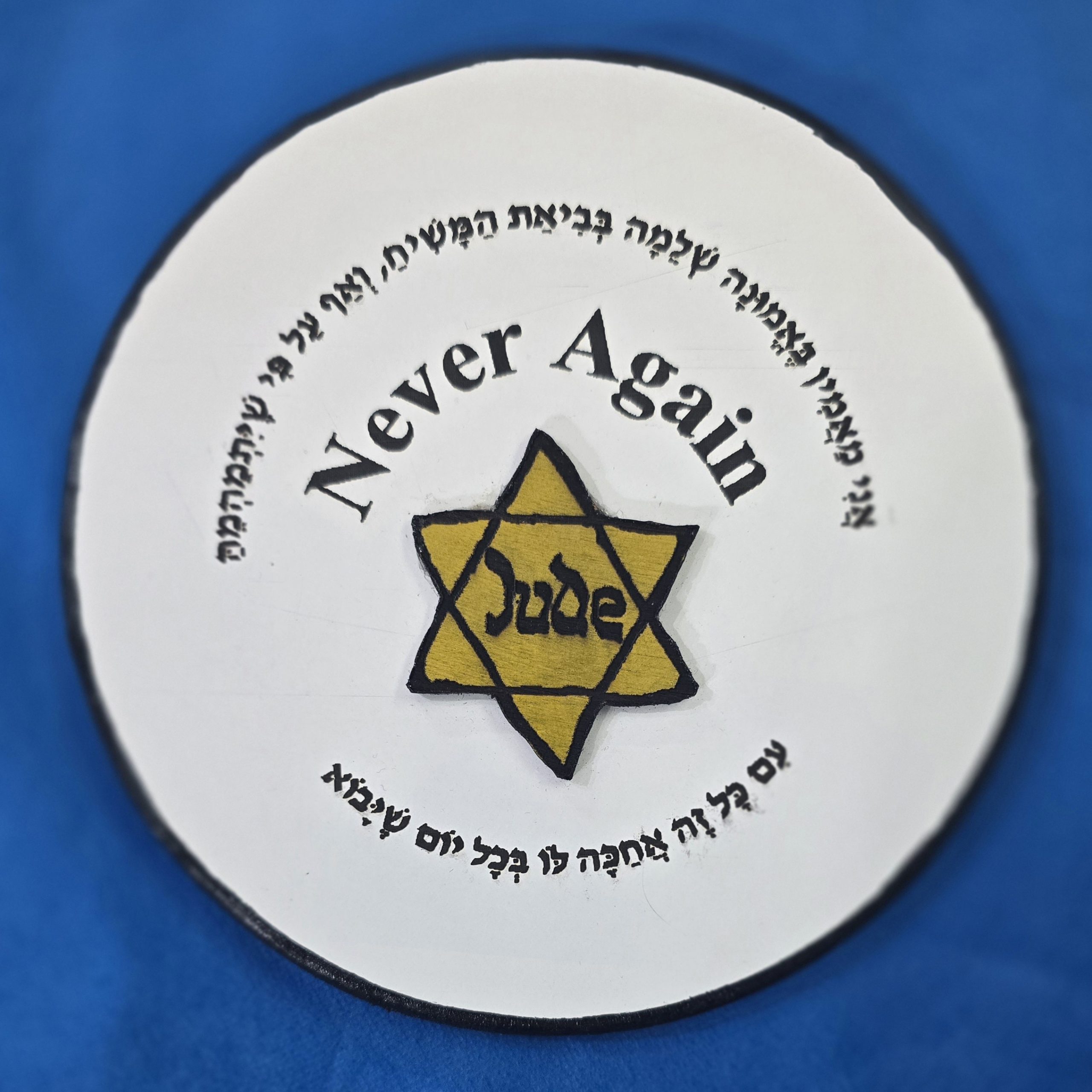
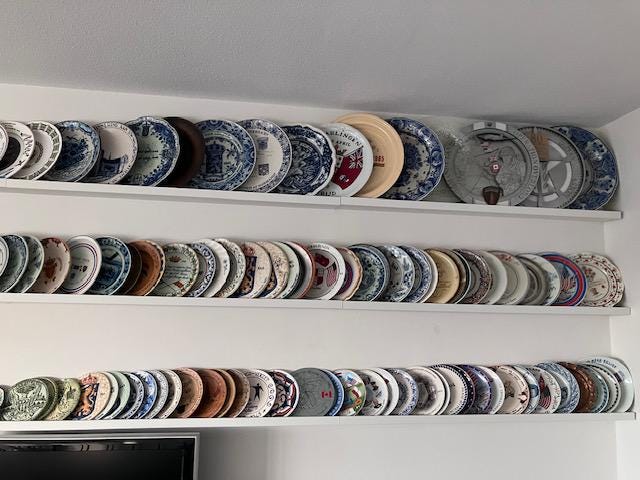
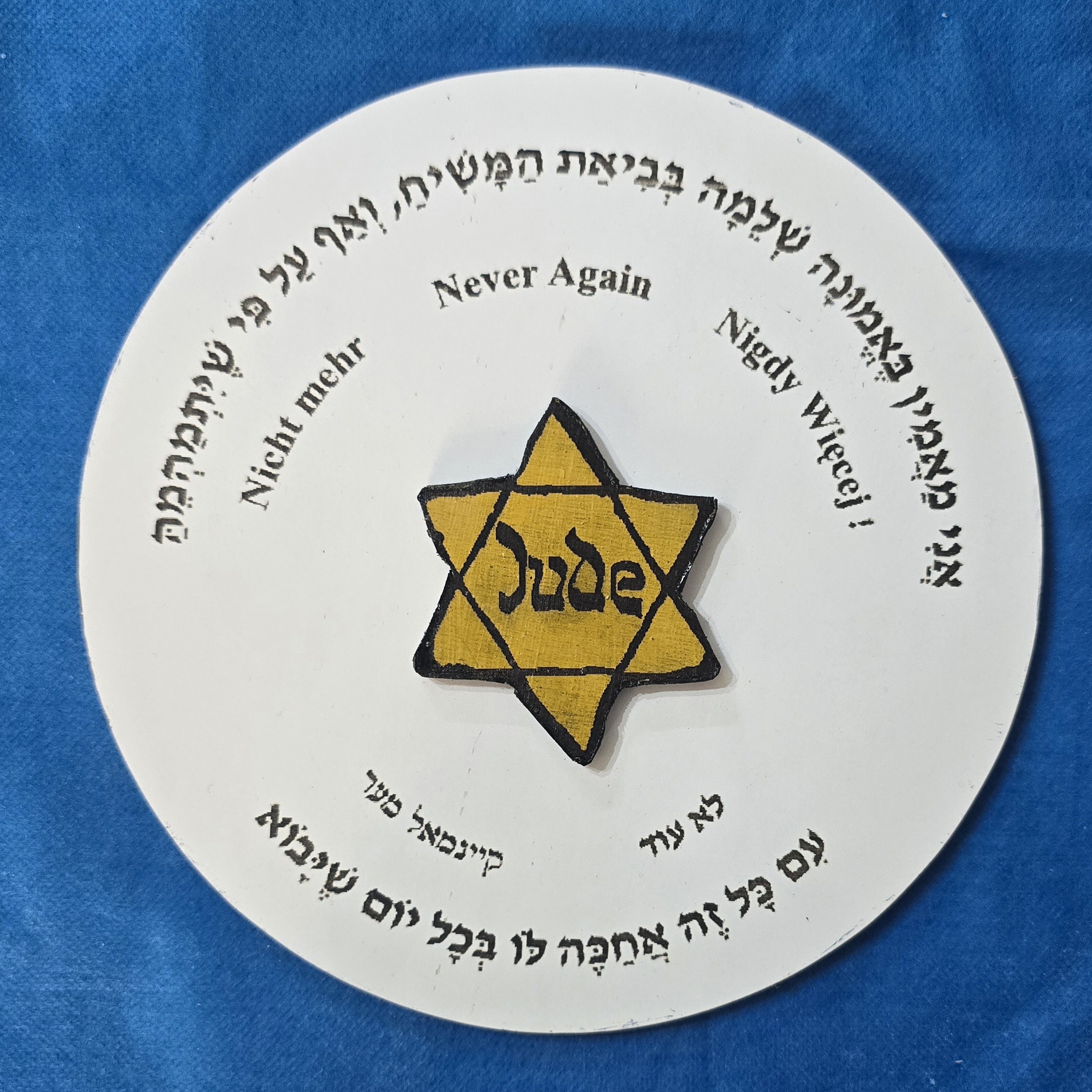
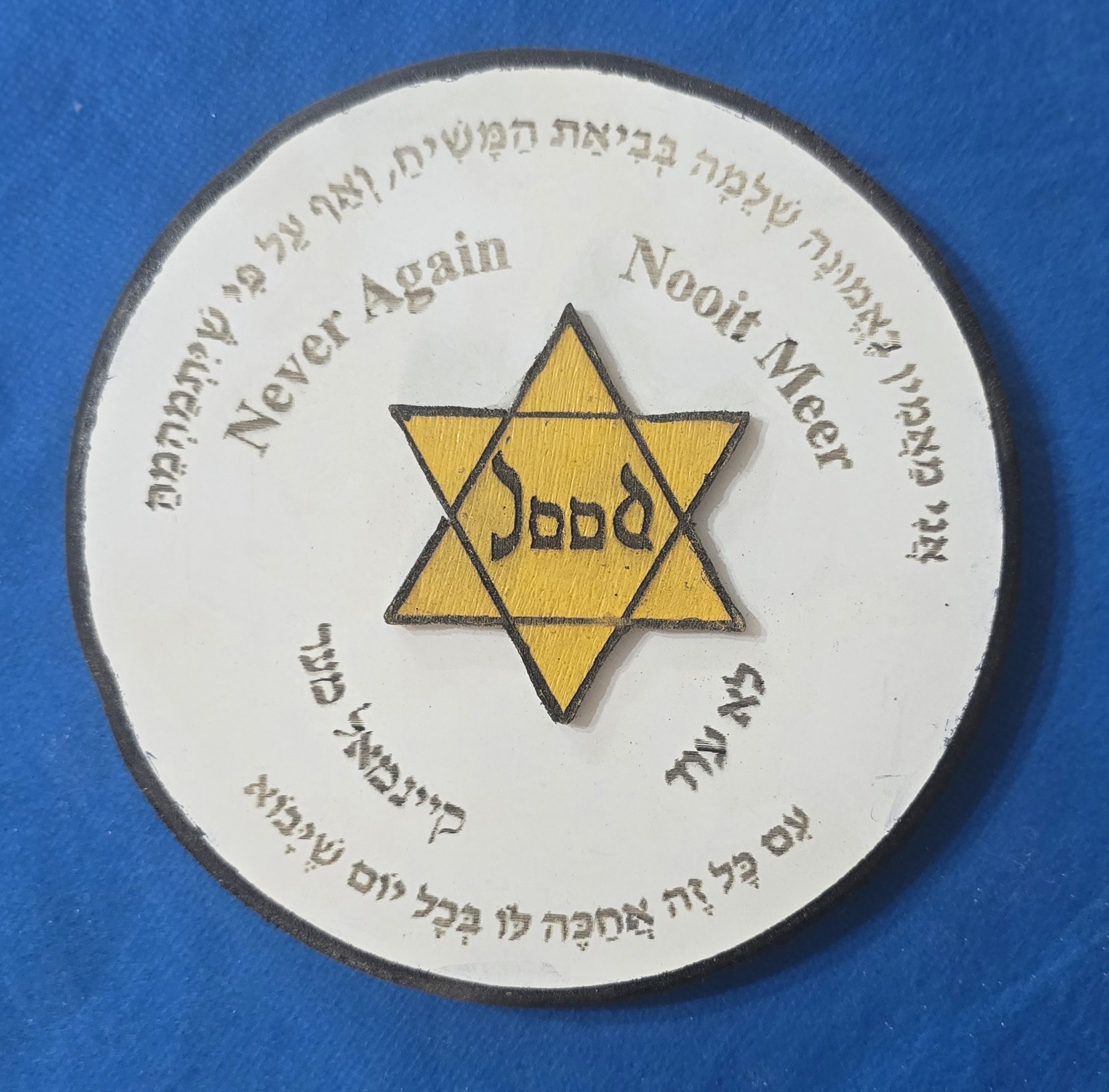
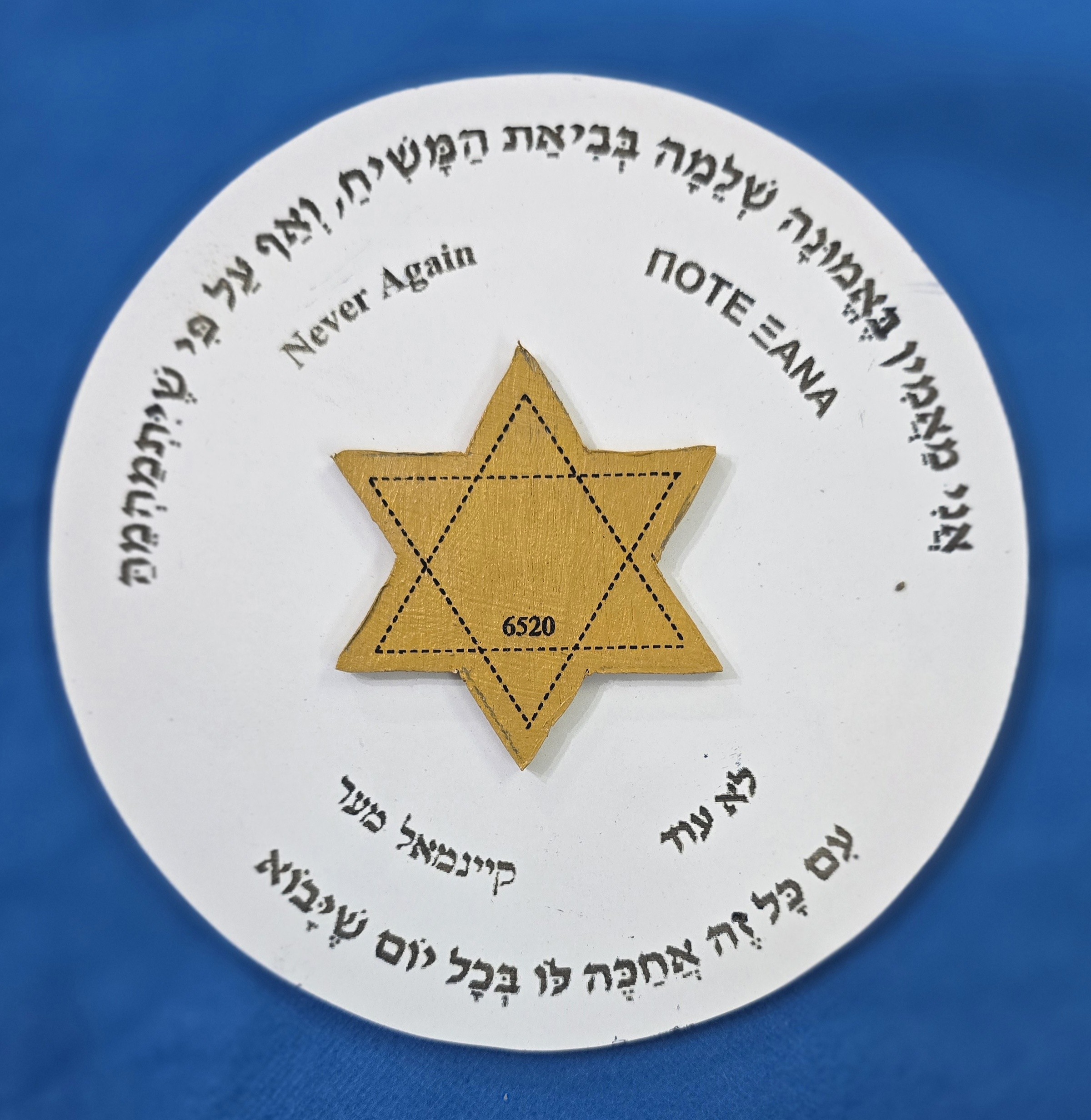
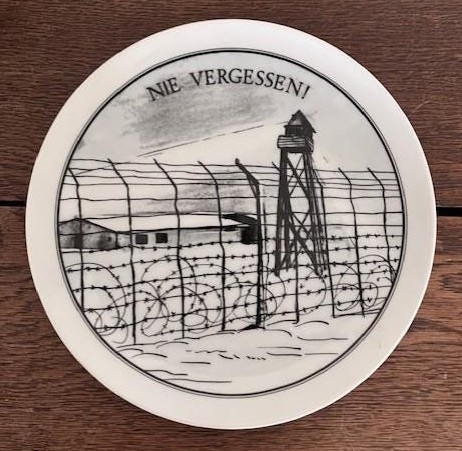 עלה לי רעיון לעיצוב צלחות מעין אלה עבור כל סוגי טלאי צהוב לכל המדינות בזמן השואה ואכתוב על הצלחת "לא עוד" בעברית, יידיש, אנגלית ובשפה מקומית. פניתי ל "יד ושם" על הרעיון, הם שלחו לי קישור של תמונות של כל טלאי הצהוב, בניתי תבניות של טלאי ללא צבע עבור מערכת הלייזר CNC לייזר
 לא עוד בצרפתית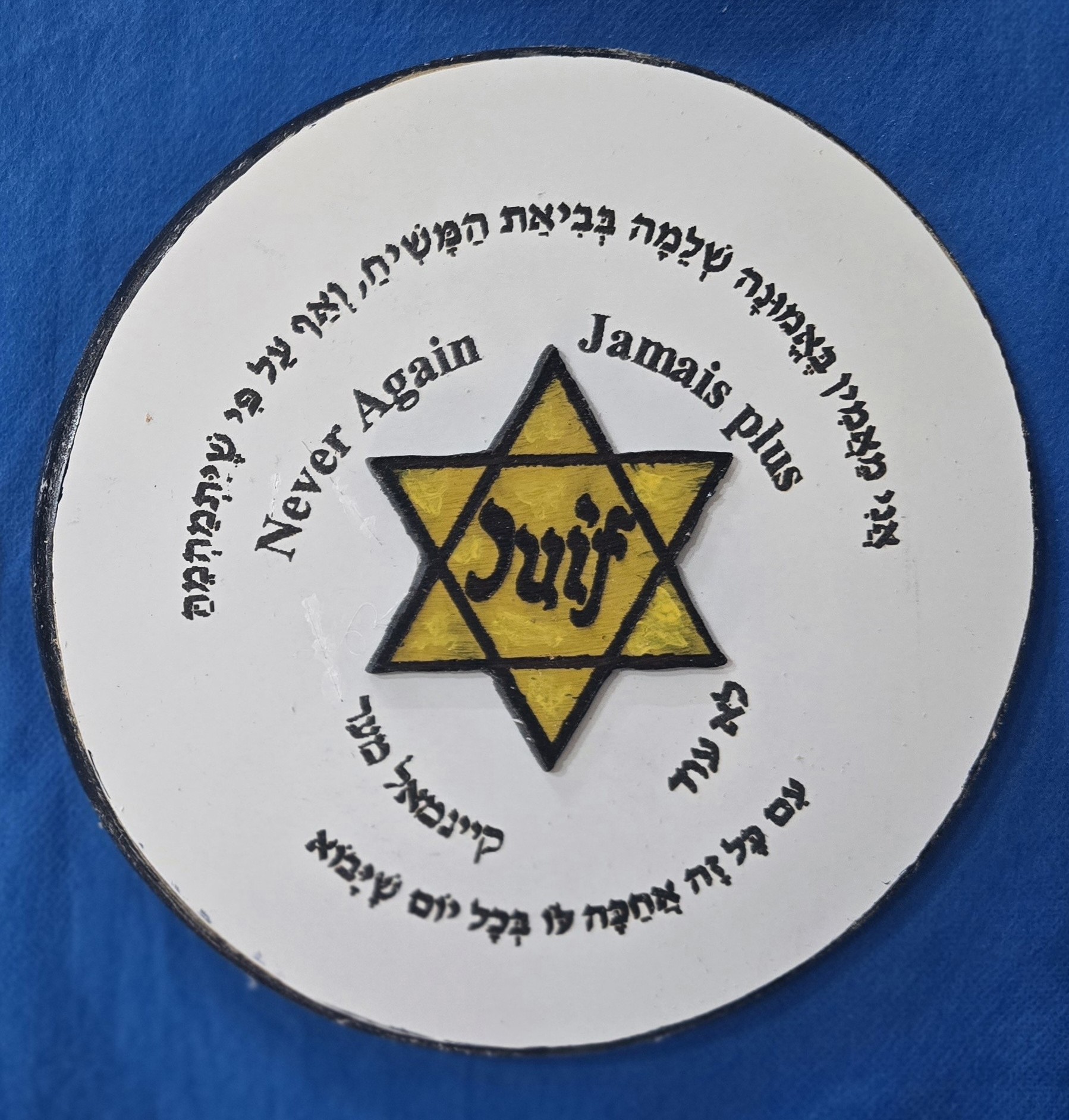
 לא עוד הונגרית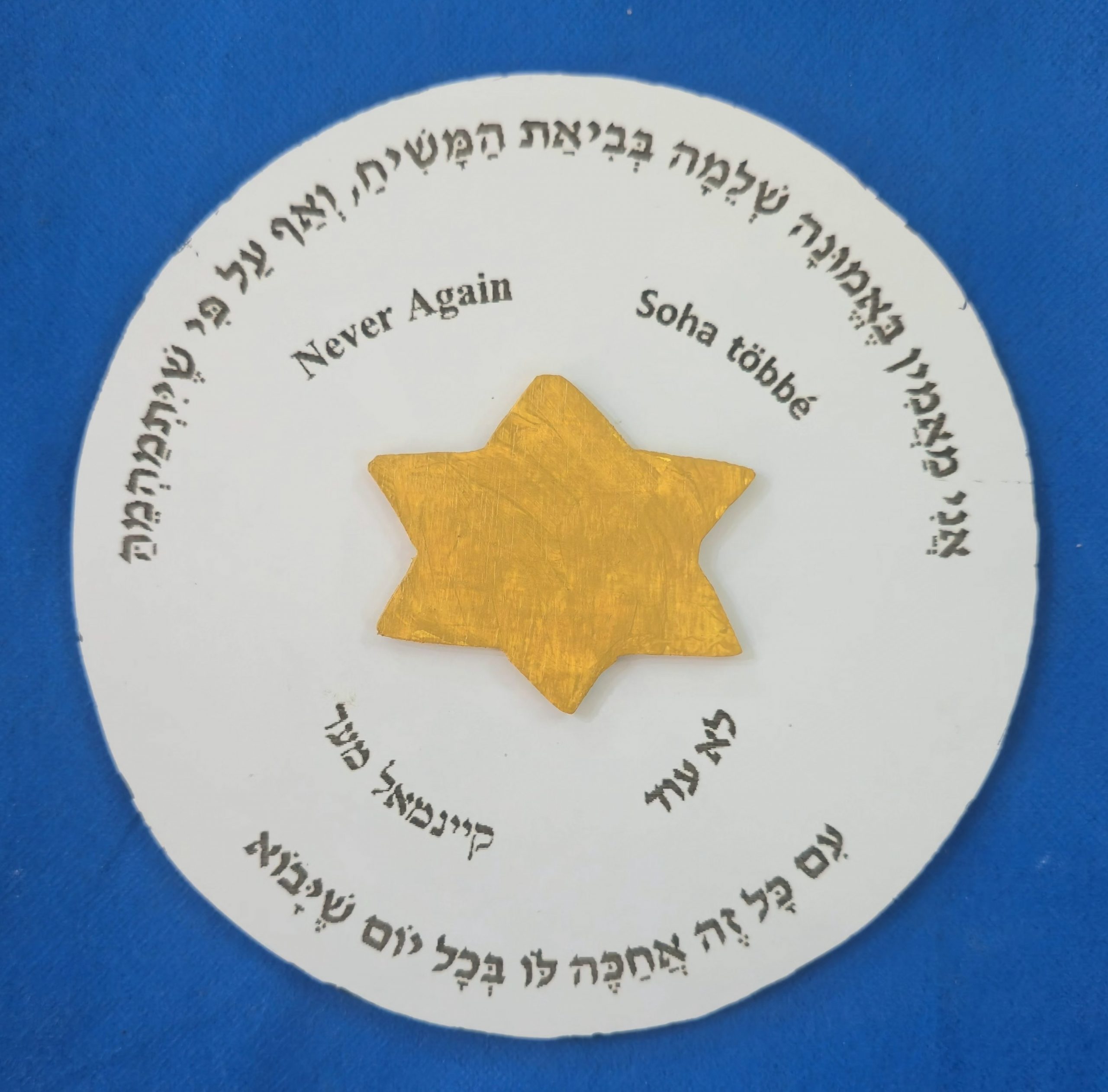


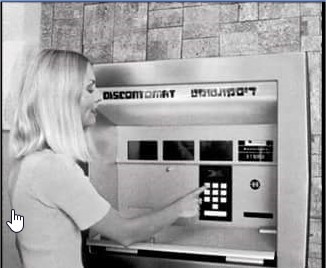


 כותרת הכתבה


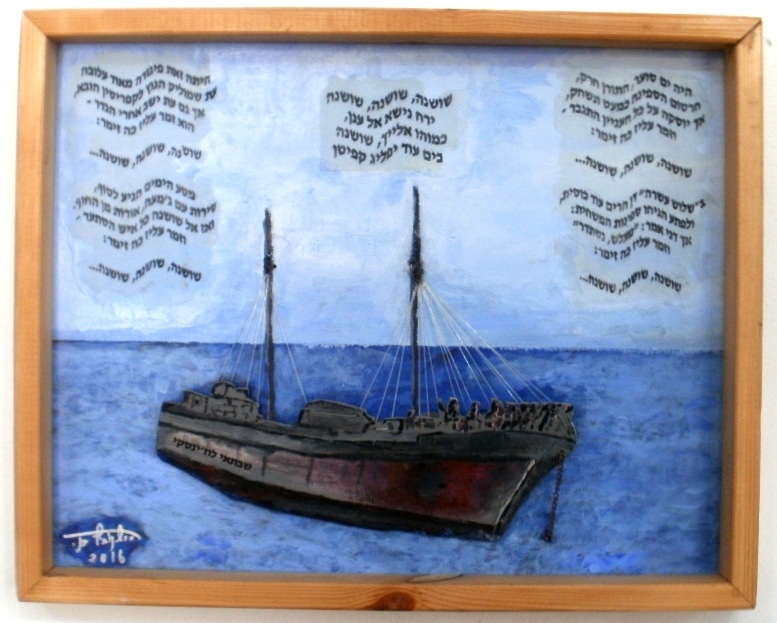
 בחול המועד פסח בתש"ח עלינו לארץ בעליה של תינוקות, בגלל שכפר עציון נפלה, עברנו לבית עולים בחדרה, שם גדלתי

 .
.


 במבנה הפח של מחנות המעפילים (נמצא במתחם חב"ד בלרנקה) הרב זאב רסקין הרב הראשי לקפריסין קבע את המזוזה


 CNC לייזר
 עכשיו תנתן האפשרות להחליט איזה תוכן רוצים על העץ, אני אעצב על המחשב ואצרוב ב CNC לייזר